

Real-Time Displacement Monitoring Analog Laser Sensor
An analog laser sensor for real-time displacement monitoring is a high precision, non contact measurement device that uses laser technology to continuously track the position or movement of an object. It’s widely used in industrial automation, structural health monitoring, precision manufacturing, robotics, and research applications.
Key Features
1. Non-Contact Measurement
No physical contact with the target, preventing wear and damage.
Ideal for delicate, moving, or hot surfaces.
2. High Precision
Typically short range displacement sensor offers 0.1mm resolution.
Accuracy with ±1mm of full scale.
3. Analog Output
Provides continuous real-time output.
Compatible with PLCs, DAQ systems, SCADA, and data loggers.
4. Real-Time Monitoring
Fast response time.
Enables dynamic tracking of vibration, expansion, contraction, or movement.
5. Laser-Based Technology
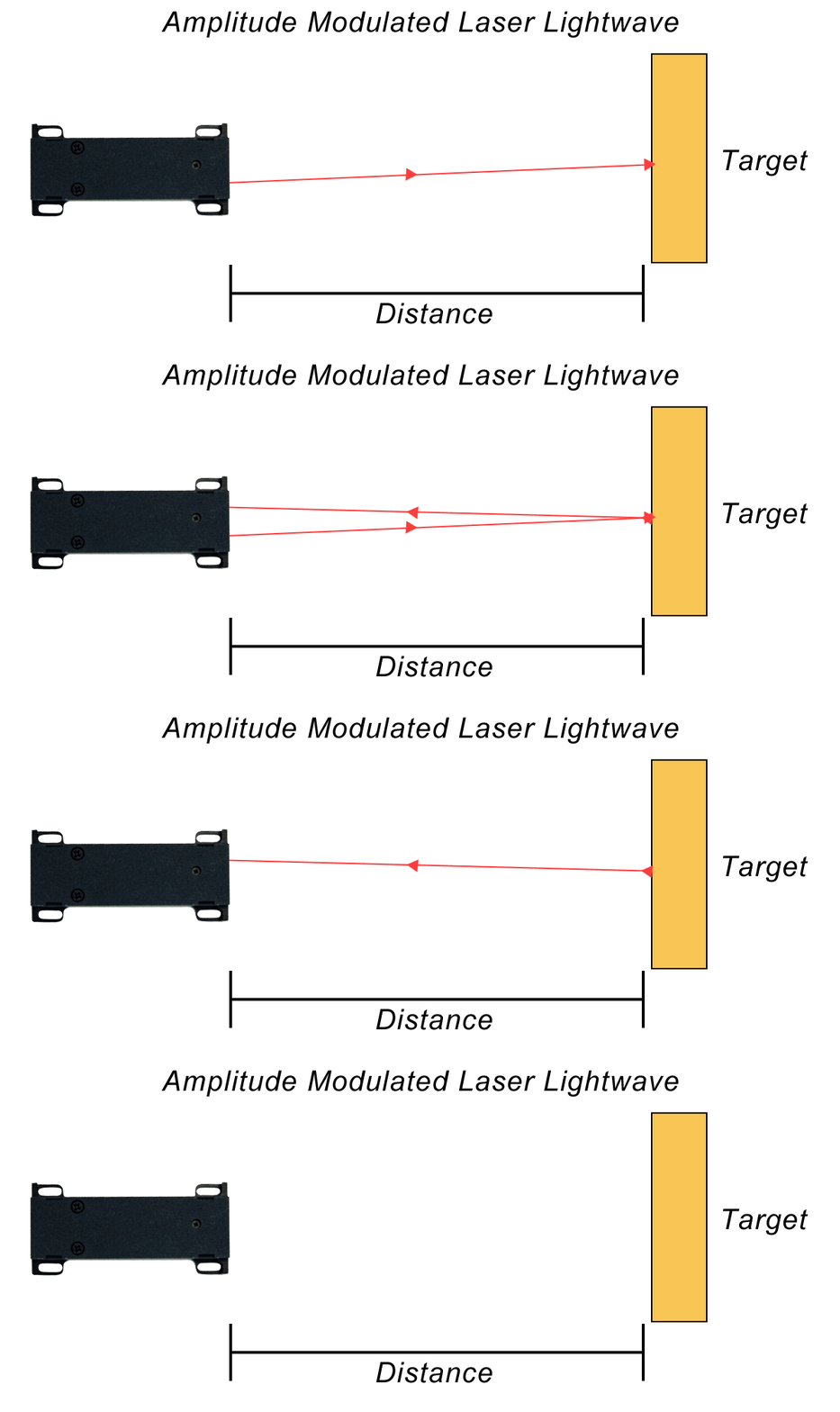
Uses phase or time-of-flight principles.
Common types: Laser Distance Sensors, Displacement Laser Rangefinder.
6. Wide Measurement Range
Adjustable range from a few millimeters up to several hundred meters, depending on laser rangefinder sensor model.
7. Environmental Robustness
Dust, humidity, and temperature-resistant options available.
IP67 or higher protection ratings in industrial variants.
8.Easy Integration
Plug-and-play analog outputs.
Software support for calibration, scaling, and visualization.
Common Applications
1. Industrial Automation: Position feedback in CNC machines, presses, conveyors.
2. Structural Monitoring: Detecting building/suspension bridge deformation.
3. Robotics AGVs: Real-time end-effector positioning.
4. Quality Control: Thickness measurement, flatness inspection.
5. Research Development: Vibration analysis, material stress testing.
6. Automotive Testing: Suspension travel, engine component movement.
Considerations
1. Surface Reflectivity: Highly reflective or dark surfaces may require special settings or coatings.
2. Ambient Light Interference: Use shielded enclosures or modulated lasers.
3. Target Movement Speed: Ensure analog laser sensor sampling rate exceeds expected motion frequency.
4. Calibration: Regular calibration laser ranging sensor required for high accuracy.
Choose laser displacement sensor based on: measurement range, resolution, speed, environmental conditions, and integration needs.
Let Seakeda know if you’d like help selecting a specific laser distance sensor model, wiring diagrams, or code examples for data acquisition!
Post time: Apr-28-2026


