

Robot Vacuum Cleaner Lidar Industry 200hz Module
This article centered on the 200Hz dToF LiDAR Module for Robot Vacuum Cleaners, covering technical specs, core advantages, industry applications, market value, and future outlook.
200Hz dToF LiDAR Module: Empowering Next-Generation Robot Vacuum Cleaners with Precision Perception
In the rapidly evolving smart home appliance sector, robot vacuum cleaners have become essential cleaning devices for modern households. Driven by consumer demand for higher cleaning efficiency, smarter navigation, and more reliable obstacle avoidance, the perception technology of robot vacuums is undergoing a revolutionary upgrade. Among various sensing solutions, the 200Hz dToF LiDAR Module stands out as a core component that redefines the performance boundaries of robot vacuum cleaners.
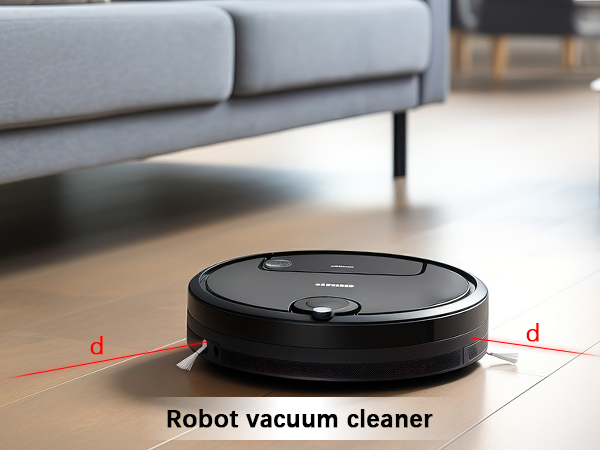
The robot vacuum cleaner LiDAR module adopts advanced direct time-of-flight ranging technology, which fundamentally differs from traditional triangular ranging and infrared sensing solutions. By emitting high-speed pulsed laser signals (905nm eye-safe Class 1 laser) and accurately calculating the flight time of reflected light, the robot lidar module achieves real-time and high-precision distance measurement of surrounding objects. Its most prominent feature is the 200Hz high-frequency sampling rate, which means the module can output 200 sets of valid ranging data per second, far exceeding the response speed of conventional low-frequency sensors. This ultra-high refresh rate ensures that the robot vacuum can instantly perceive dynamic changes in the environment, laying a solid foundation for agile obstacle avoidance and smooth navigation.
In terms of core technical parameters, this industrial-grade dToF LiDAR module boasts excellent performance indicators tailored for robot vacuum applications. It supports a detection range of 0.05–20 meters (under 90% reflectivity), with a minimum blind area as low as 5cm and centimeter-level measurement accuracy (±3cm within 5 meters, 1% error beyond 5 meters). The ultra-compact physical design (21mm×15mm×7.43mm) and lightweight structure (only 2g) make it easy to integrate into the narrow internal space of robot vacuums without increasing the overall weight of the device.
Meanwhile, the 200Hz LiDAR module adopts an ultra-low-power design, with an average power consumption of less than 0.2W and an operating current of only 75mA, which effectively extends the battery life of the robot vacuum and optimizes the endurance performance of the whole machine. It also supports a wide operating temperature range of -20°C to 60°C, ensuring stable operation in various home environments, and is equipped with UART and IIC communication interfaces for flexible system docking and data transmission.
In the actual application scenario of robot vacuum cleaners, the 200Hz dToF LiDAR module demonstrates irreplaceable functional advantages. First, it realizes high-precision SLAM (Simultaneous Localization and Mapping). The 200Hz high-frequency data output enables the robot vacuum to construct a high-resolution 3D environmental map in real time, accurately identifying the layout of the home, the position of furniture, and the boundaries of the space. Compared with traditional mapping sensors, it can capture finer environmental details, avoiding map distortion and missing areas, and ensuring full-coverage cleaning without dead ends. Second, the module achieves intelligent and agile obstacle avoidance. Whether it is small obstacles such as socks, data cables, and pet toys, or tall obstacles such as tables, chairs, and walls, the module can detect them in advance and quickly feed back distance information to the main control system. The robot vacuum can adjust the cleaning path in milliseconds, effectively reducing collision risks and protecting both the device and home furniture from damage.
In addition, the 200Hz dToF LiDAR module has strong environmental adaptability. Equipped with professional optical filters and anti-interference algorithms, it can resist ambient light interference up to 70,000 lux, maintaining stable ranging performance in strong light environments such as sunny balconies and dimly lit rooms. This solves the common problem of sensor failure caused by light changes in traditional robot vacuums. It also supports cliff detection function, accurately identifying height differences such as stairs and steps, and preventing the robot from falling. The combination of high frequency, high precision, and high stability makes this module suitable for complex home environments with multiple rooms, diverse furniture, and varying light conditions, greatly improving the user experience.
From the perspective of the industrial chain and market value, the 200Hz dToF LiDAR module promotes the iterative upgrading of the entire robot vacuum industry. For manufacturers, the module’s high integration, simplified peripheral circuit design, and cost-effective advantages help reduce the R&D and production costs of robot vacuums, while improving product performance and competitiveness. It accelerates the popularization of high-end perception technology in mid-range and entry-level products, allowing more consumers to enjoy intelligent cleaning services. For the global robot vacuum market, which is expanding year by year, the application of this module meets the core demands of consumers for intelligence, efficiency, and safety, becoming a key selling point for product differentiation. Market research data shows that robot vacuums equipped with dToF LiDAR technology have a significantly higher user satisfaction and repurchase rate than traditional models, driving the industry to develop towards higher precision and stronger intelligence.
Looking forward to the future development of the smart home and robot vacuum industry, the 200Hz dToF LiDAR module will continue to play a core driving role. With the continuous advancement of semiconductor technology and sensor manufacturing processes, the module will develop in the direction of smaller size, lower power consumption, higher frequency, and higher precision. It will be deeply integrated with AI algorithms, enabling robot vacuums to achieve more intelligent functions such as object recognition, behavioral prediction, and adaptive cleaning. At the same time, as a mature industrial-grade sensing component, this dToF module will also expand its application scenarios to other mobile robots such as service robots, sweeping and mopping integrated machines, and industrial AGVs, creating broader market space.
In conclusion, the 200Hz dToF LiDAR module, with its high-frequency response, high-precision ranging, ultra-low power consumption, and compact design, has become a core perception component that revolutionizes the performance of robot vacuum cleaners. It solves the pain points of traditional sensors such as slow response, low precision, and poor environmental adaptability, and comprehensively improves the navigation, mapping, obstacle avoidance, and cleaning effects of robot vacuums. In the wave of global smart home upgrading, this module will continue to lead the technological innovation of the robot vacuum industry, providing users with a more efficient, intelligent, and secure cleaning experience, and injecting sustained impetus into the high-quality development of the entire industry.
Post time: Aug-18-2026


